4×18: Revisited
Now that we’ve explored the implications of “Swan Song” (5×22) for our understanding of Chuck’s relationship to authorship, we ought to revise our analysis of “The Monster at the End of This Book” (4×18) in light of what we’ve learned.
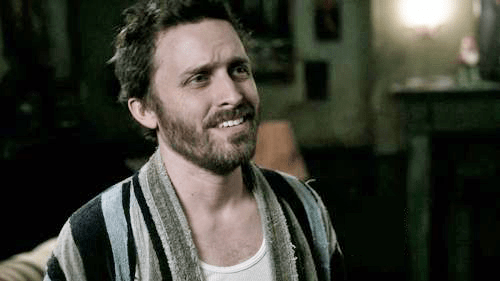
5×22 ends ambiguously in terms of whether Chuck is himself God or whether his is still a prophet of the Lord. As such, it is still unclear whether Chuck has control, as we would imagine God might, over the narrative itself, or whether he merely receives it as a vision and translates that onto the page. Regardless, we can still view Chuck’s introduction with greater suspicion. Let’s take another look at his conversation with Sam and Dean after he accepts they are his characters:
CHUCK: Well, there’s only one explanation. Obviously, I’m a god.
SAM: You’re not a god.
CHUCK: How else do you explain it? I write things and they come to life. Yeah, no, I’m definitely a god. A cruel, cruel, capricious god. The things I put you through—the physical beatings alone. […] All for what? All for the sake of literary symmetry. I toyed with your lives, your emotions, for entertainment.
If Chuck is a prophet as he says, then we may still see this conversation in a comedic light—Chuck fundamentally misunderstanding his relationship to the work he produces. But if Chuck is God, then we might see this as a sort of confession, an acknowledgement that he has put the Winchesters through all manner of terrible things for the sake of a “good” story. But if the latter case is true, it is rather disturbing that Chuck would continue to force the Winchesters through these terrible challenges just “for the sake of literary symmetry.” And yet further, if Chuck were God, omniscient and possessing a “plan,” he would know even at this point how the Winchesters’ stories would end, and given that he is satisfied with that ending in 5×22, he would not wish to deter them from it by revealing his knowledge to them.
So why would he put himself in the story? One answer might be that, given the central theme of his narrative is free will triumphing over determination, he would want the Winchesters, and the audience, to feel as though their actions overthrew destiny, that they acted out of free will and defied the roles they were purportedly born to play. Chuck the prophet, then, would be the perfect tool through which to provide a prophecy against which to act, leading them to play into the much more satisfying, hidden narrative that was his plan all along.
This produces a sort of paradox—the satisfaction of the narrative’s ending in 5×22 hinges upon the brothers’ free will, but that free will is actively constructed by God, thus throwing those same themes into confusion. Therefore, whether we take Chuck to be God or His prophet, the confirmation of free will at the end of “Swan Song” remains in question and must, as a result, persist as an unresolved thematic preoccupation for the rest of the show.
 The God Author