Introduction
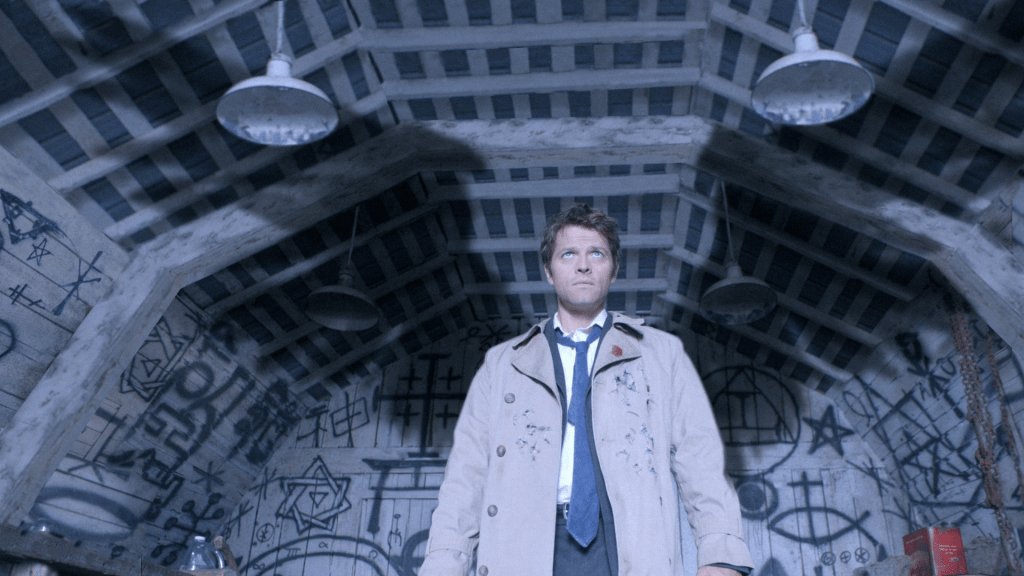
Supernatural first aired on The WB on September 13, 2005, and ran for 15 seasons until its series finale on November 19, 2020. The show follows brothers Sam (Jared Padalecki) and Dean Winchester (Jensen Ackles) as they travel across the country fighting supernatural creatures and grappling with larger-scale apocalyptic events. Although demons had been part of the show since its first season, it wasn’t until season 4 that it officially introduced Christian mythology into the storyworld—angels like Castiel (Misha Collins), archangels like Lucifer and Michael, prophets like Chuck (Rob Benedict), and even God (evoked through his absence).
Alongside the emergence of this Christian mythology came an increasingly metareferential aspect of the show, which became most apparent in episode 4×18, “The Monster at the End of This Book,” in which the brothers discover that there is a pulp book series detailing their lives (which follows the episodes of the first three seasons) and they track down the author, Chuck Shurley (or his pseudonym, Carver Edlund).
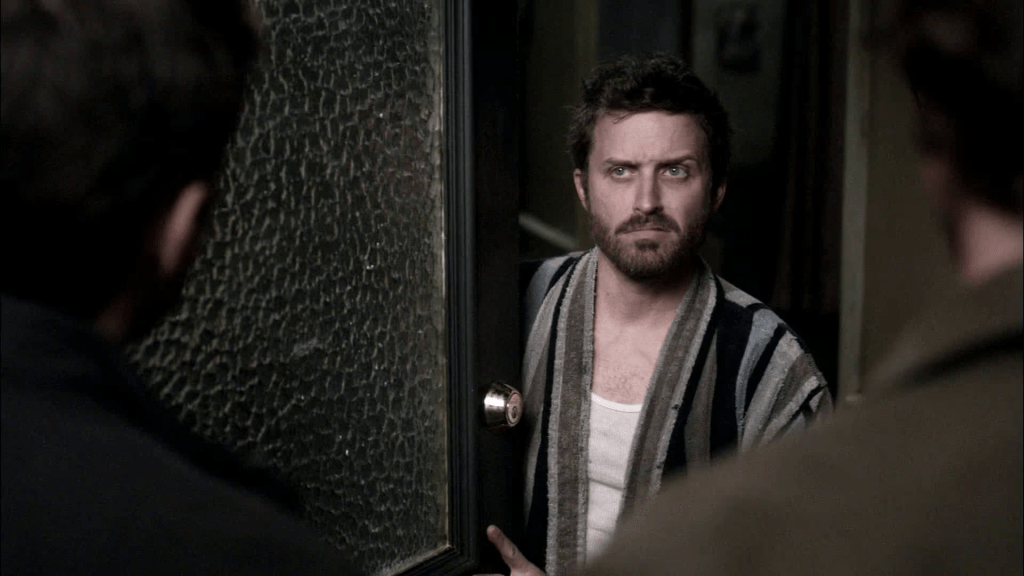
Through this dual emergence of Christian mythology and metareferentiality, which permeates future episodes as well, Supernatural self-reflexively calls into question notions of authorship and free will. Free will and determination had already permeated the themes of the show on a more micro level through Sam’s “destiny” as one of Azazel’s soldiers and Dean’s own position as his father John’s soldier. But with the (uneasy) confirmation in season 4 that God and Heaven, not just Hell, exist in the show’s world adds new, philosophical stakes to their journey. Further, the emergence of metareference, in which it calls attention to itself as a narrative construction authored from on high, suggests the shows own struggles with what it means to be free narratively, and whether that is really possible.
In essence, it is those various levels of meaning, made manifest through the character of Chuck, that this project seeks to unravel. With that, let’s take a look at Chuck’s introduction.
 The God Author